

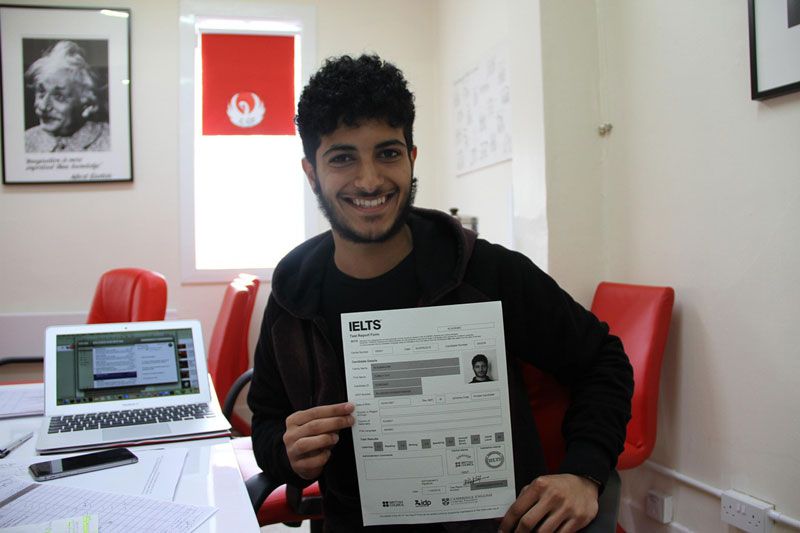
Your IELTS score can decide whether you get a university offer, a visa approval, or even a job interview, and yet, many test-takers do not fully understand what those band numbers actually mean. Decoding IELTS band scores is not just about knowing your marks, but about understanding how universities, employers, and immigration authorities interpret your IELTS test results when making real decisions.
If you are planning to study, work, or migrate abroad, this guide will help you understand how your IELTS scores are evaluated, how they influence outcomes, and what role your IELTS test registration and result profile play in shaping your next opportunity.
What IELTS Band Scores Actually Measure?
IELTS band scores are based on international language standards and are meant to show how well a person can actually use English in real situations. Instead of focusing only on correct answers, the test looks at how confidently and accurately a candidate can understand others and express ideas in study, work, and everyday life.
- Listening and Reading check how well you understand information and choose the correct answers within a limited time.
- Writing checks involves how clearly you explain ideas, organise your points, use correct grammar, and select suitable words.
- Speaking checks how smoothly you talk, how clearly you pronounce words, and how well you respond during a conversation.
Why Is Overall Band Score Not the Only Decision Factor?
Many students focus only on their overall IELTS band score, but in reality, most universities, employers, and professional bodies look closely at each individual skill score before making a decision. Even if a candidate has a good overall band, a low score in one section can still become a problem.
For example, a student with an overall 7.0 may be rejected because of a low Writing score, and a healthcare applicant may fail eligibility if their Speaking score does not meet the required standard. This is why your complete IELTS score profile is often more important than just the final average band.
How Universities Analyse IELTS Test Results?
Universities do not look at IELTS scores in the same way for every course. They mainly check the section scores that are most important for the subject you are applying for.
For courses like Law, Business, Humanities, and Social Sciences, more importance is given to Writing and Reading, because students need to write essays, read research material, and understand academic content.
For courses such as Education, Nursing, Psychology, and Media, universities usually focus more on Speaking and Listening, as these courses involve discussions, presentations, and practical training. For technical and STEM courses, reading and listening are more important to understand textbooks and lectures, but Writing is still needed for assignments and project work.
This is why different universities set different minimum scores for each IELTS section instead of looking only at the overall band score.
How Immigration Authorities Use IELTS Test Results?
Immigration authorities use IELTS test results to understand how well an applicant can use English in real-life situations. The score helps them judge whether a person can communicate in daily life, function confidently at work, and adapt smoothly to life in a new country. In many countries, a higher IELTS score can also increase migration points, improve eligibility under certain visa categories, and open access to professional or skilled-worker pathways. In this way, your IELTS result becomes an official and trusted proof of your English language ability.
How Professional Bodies Use IELTS Test Results?
Professional bodies treat English language ability as an important safety requirement. In fields such as healthcare, education, and engineering, IELTS is used to check whether a person can clearly understand instructions, avoid mistakes caused by poor communication, and interact properly with patients, students, or clients. Because communication directly affects safety and work quality in these professions, such organisations usually ask for higher minimum scores in each IELTS section than most universities.
IELTS Test Registration and Its Role in Verification
Accurate IELTS test registration is essential because all result checks and official verification depend on the personal details you provide while booking the test. Even small mistakes can cause issues later during admissions or immigration processes.
- The name, passport number, and date of birth you enter must match your university application and visa records.
- Any mismatch can delay your admission decision, visa approval, and professional verification of your IELTS result.
How Institutions Verify IELTS Test Results?
Universities and visa authorities verify your IELTS test results through the official online verification system using your TRF number. They check:
- candidate identity
- test date
- test centre
- band scores
How to Improve Your IELTS Profile Strategically?
To improve your IELTS profile smartly and effectively, it is better to work on your overall performance instead of only trying to increase your final band score.
- Start by focusing on the section where you are weakest.
- Practise your writing regularly with proper time limits, just like in the real test.
- Record your speaking answers and listen to them to check your clarity, grammar, and mistakes.
- Try to improve how clearly your ideas connect and how accurate your grammar is, rather than memorising fixed or fancy phrases.
In conclusion, IELTS band scores are not just simple numbers on a scorecard. Your IELTS test results are carefully analysed by universities, immigration authorities, and professional bodies to judge your academic readiness, communication ability, and real-world language performance. By understanding how each section score is interpreted and by completing your IELTS test registration correctly, you can avoid common mistakes, target the right band scores, and improve your chances of success in study, work, and migration applications.
For those who may feel overwhelmed by the process, structured guidance can make a significant difference. Platforms like Leverage Edu assist you at various stages of your study abroad journey by offering insights, resources, and counselling support to help you make informed decisions with confidence.
FAQs
Can low Writing scores affect my admission even if my overall IELTS score is high?
Yes. Many universities apply minimum section requirements. Even if your overall IELTS test results meet the cut-off, a low Writing score can lead to rejection, especially for courses that involve essays, reports, and academic research work.
What happens if my name is incorrect during IELTS test registration?
If your name or passport details are entered incorrectly during IELTS test registration, it can cause verification problems. Universities and visa authorities may delay your application or ask for additional confirmation before accepting your IELTS test results.
Can I use the same IELTS test results for multiple universities and visas?
Yes. You can use the same IELTS test results for multiple applications, as long as the scores are still valid and meet each institution’s requirements. Universities and embassies can verify your results online using your TRF number.
Can I combine two different IELTS scores to meet a university requirement?
No. You cannot combine scores from different test attempts. Universities and authorities accept only one complete set of IELTS test results from a single test sitting, even if your best section scores come from different exams.